Orthodontics · June 23, 2026 · 9 min read
Class I Malocclusion: When the Jaw Bones Are Sound but the Teeth Are Misaligned
In Class I malocclusion the jaws sit in a good relationship — the problem is in how the teeth are arranged. Learn about crowding, spacing, crossbite, and protrusion, the treatment options, and why retainers matter.

Dr. Abdulnasser Mosa Almahmoud
Orthodontist & Dentofacial Orthopedics Consultant
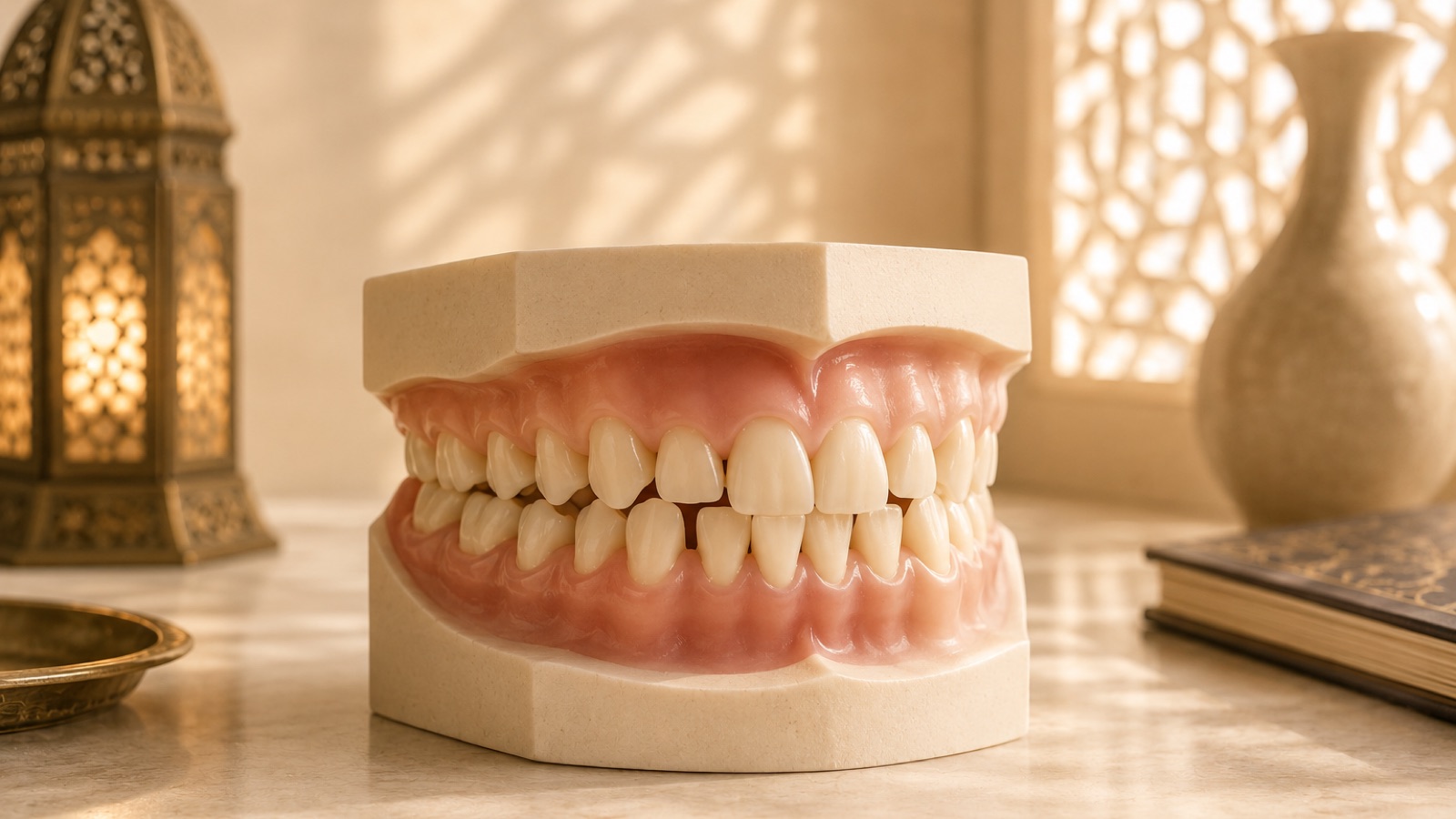
When you visit an orthodontist, the first thing carefully assessed is the relationship between the jaws and how the upper and lower teeth meet when the mouth closes. In Class I malocclusion, the underlying relationship between the jaws is usually sound, and the back bite between the upper and lower teeth is close to normal.
But even though the skeletal relationship between the jaws is sound, the problem can show up in how the teeth themselves are arranged. In other words, the issue here isn't the growth of the upper or lower jaw — it's the way the teeth sit within the dental arch.
So we can see a patient with well-balanced jaw bones who still has crowding, annoying gaps, a crossbite on some teeth, or protrusion that affects the shape of the smile and lips.
What is Class I malocclusion?
Class I malocclusion is a condition in which the jaw relationship is acceptable or relatively normal, but the teeth themselves aren't lined up correctly. The teeth may be overlapping, rotated, spaced apart, or sitting outside their natural position within the dental arch.
This type of malocclusion is one of the most common in orthodontic practice, and its treatment results are usually excellent with a precise plan and good adherence to the doctor's instructions.
Where does the problem lie in Class I?
In Class I, the problem usually isn't the size or position of one jaw relative to the other, as happens in some Class II or Class III cases. The problem is usually in one or more of the following factors:
- Not enough space for the teeth.
- Too much space between the teeth.
- Tipping or rotation of some teeth.
- Forward protrusion of the front teeth.
- A tooth or group of teeth sitting outside the natural alignment.
- A slight difference in the width of the upper or lower arch.
So the orthodontist needs to assess the teeth and the jaws together — not just look at the front teeth.
Common presentations of Class I
Class I malocclusion takes many forms — some mild and only visible when smiling, and some that can affect cleaning, chewing, or speech.
1. Crowding
Crowding happens when the space available within the jaw is smaller than the size of the teeth. In this case, the teeth are forced to grow over one another, rotate, or tip out of their natural position.
Crowding may appear clearly in the lower front teeth or in the upper teeth, and it can be mild, moderate, or severe depending on how much space is lacking.
Why does crowding happen? It can occur because the teeth are large relative to the jaw, because of a narrow dental arch, as a result of losing baby teeth early, or because some teeth erupt late. In some cases, genetics clearly play a role.
2. Spacing
Unlike crowding, gaps appear when the space within the jaw is larger than the size of the teeth, or when the teeth are smaller than expected. The gaps may be small and scattered, or clearly visible between the front teeth — especially between the two upper central teeth, sometimes known as a diastema.
Gaps can affect the shape of the smile and may, in some cases, cause air to escape during speech — especially if they're between the front teeth.
3. Localized crossbite
In a crossbite, one tooth or a group of upper teeth sits behind the lower teeth when the mouth closes, instead of in front of them as is normal.
A crossbite can be in the front or the back, and it may appear on only one side. In some Class I cases, the overall jaw relationship is sound, but there's a localized problem in one or several teeth that needs correcting.
4. Bimaxillary protrusion
In this case, the upper and lower jaws are relatively harmonious, but the upper and lower front teeth are tipped forward. This tipping can push the lips outward and affect the side profile of the face.
The patient may feel that their lips are prominent or that closing the mouth takes a little effort — even though the skeletal jaw relationship isn't the main problem.
Why should Class I malocclusion be treated?
Some people assume Class I problems are purely cosmetic, but they can have health and functional dimensions too. The arrangement of the teeth affects not only the shape of the smile but also how easily they can be cleaned, how chewing forces are distributed, gum health, and the stability of the bite.
Difficulty cleaning and tartar buildup
Crowded teeth create tight angles that are hard for a toothbrush and floss to reach. Over time, this can increase the likelihood of food debris and tartar building up, which raises the risk of tooth decay and gum inflammation.
For this reason, aligning the teeth isn't only about improving appearance — it also makes daily oral care easier.
Uneven tooth wear
When some teeth sit outside the natural alignment, they may bear greater chewing forces than others. This can lead to uneven enamel wear, minor chipping of the tooth edges, or discomfort when closing.
Correcting the alignment helps distribute chewing forces in a better, more balanced way.
A possible effect on speech
Large gaps and protruding teeth can affect the production of certain sounds — especially those that depend on air passing between the teeth or on the tongue contacting the teeth. Some patients notice a difference in clarity after gaps are closed or the front teeth are repositioned.
An effect on confidence and the smile
Even when the problem is medically minor, it can affect the patient psychologically. Crowding, gaps, or protruding teeth may make a person hesitant to smile or be photographed. So treating Class I can give the patient a more confident, comfortable smile.
How does the orthodontist diagnose Class I?
Diagnosis relies on a comprehensive exam of the mouth and face — it isn't enough to look at the front teeth only. The orthodontist usually assesses:
- The relationship of the upper and lower molars.
- The amount of crowding or spacing.
- The shape of the dental arch.
- The tipping of the front teeth.
- Any crossbite or rotation in the teeth.
- The health of the gums and supporting bone.
- Radiographs and analyses when needed.
- Photographs of the mouth and face before starting treatment.
This assessment helps determine whether treatment is possible without extraction, or whether the case needs extra space created by other means.
Treatment options at the orthodontic clinic
Because the problem in Class I is usually dental rather than skeletal, treatment options are usually varied, and success rates are good with adherence to the plan and follow-up.
1. Aligning the teeth and expanding the dental arch
In mild to moderate crowding, the orthodontist may arrange the teeth by carefully expanding the dental arch or gradually moving the teeth into their correct positions.
This option can create enough space without the need for extraction, but it doesn't suit every case. Expansion must stay within safe limits that preserve the health of the gums and the bone surrounding the teeth.
2. Minor reduction between the teeth (IPR)
In some cases, a very small, carefully measured reduction can be done between some teeth — known as Interproximal Reduction, or IPR. The goal of this step is to create a small amount of space that helps align the teeth and improve their harmony.
This procedure is done in very limited amounts under the doctor's supervision, and is only used when it's appropriate for the case.
3. Therapeutic extraction
In cases of severe crowding or clear bimaxillary protrusion, the available space may not be enough to arrange the teeth in a healthy, stable way. Here the doctor may suggest the careful, symmetrical extraction of some teeth.
Extraction is never a goal in itself — it's a means of creating space used to retract protruding teeth, arrange crowded teeth, or improve the appearance of the lips and face.
The decision to extract relies on a careful analysis of the case, and is only taken when its treatment benefits outweigh the other alternatives.
4. Closing gaps between the teeth
For spacing, metal, ceramic, or clear braces can be used to bring the teeth closer together. Here the doctor cares not only about closing the gap, but also about adjusting the bite to ensure the result is stable.
In some cases, the patient may need an additional cosmetic assessment if the cause of the gap is small tooth size — where orthodontics may be combined with some cosmetic procedures after treatment.
5. Treating a localized crossbite
If the problem is a crossbite in one tooth or a small group of teeth, it can be corrected by moving the teeth into their correct position. In some cases where the upper arch is narrow, the doctor may need to use appropriate expansion appliances — especially in children or teens.
The goal is to return the teeth to a normal relationship that prevents wear and unbalanced pressure.
Can Class I be treated with clear aligners?
Yes — many Class I cases can be treated with clear aligners, especially mild to moderate crowding, spacing, and some cases of mild protrusion or rotation of the teeth.
But the decision depends on the details of the case and how well the patient wears the trays as instructed. In some more complex cases, fixed braces may be a more precise or more suitable option.
The importance of retainers after treatment
After orthodontic treatment ends, a phase begins that's no less important than the movement phase — the retention phase. Teeth tend to move over time and may try to return to their previous position if they aren't held well.
So the doctor usually recommends using retainers, which may be removable or fixed depending on the case. Sticking to the retainers helps preserve the result and prevents the return of crowding or gaps.
When should you see an orthodontist?
It's best to see an orthodontist when you notice any clear crowding, gaps between the teeth, a crossbite, protrusion of the front teeth, or difficulty cleaning because of overlapping teeth.
Children should also be checked early, because catching problems in their early stages helps choose the right timing for treatment and avoid future complications.
In summary
Class I malocclusion usually means the jaw bones are in a good relationship, but the problem shows up in how the teeth are arranged. This can take the form of crowding, gaps, a localized crossbite, or dental protrusion that affects the smile and lips.
Although these cases may look cosmetic at first, they can affect cleaning, gum health, tooth wear, and chewing and speech function.
Treatment is usually effective with excellent results when the diagnosis is correct — whether using traditional braces, clear aligners, or space-creating plans such as expansion, minor reduction, or careful extraction.
In the end, sticking to your retainers after treatment is the key step to preserving a beautiful, stable result for as long as possible.
Written by
Dr. Abdulnasser Mosa Almahmoud
Board-certified orthodontist with 25+ years of experience treating adults and children in Riyadh.
AboutReady to start your smile journey?
Book a consultation with Dr. Almahmoud to find the treatment that fits your case.