Orthodontics · June 23, 2026 · 7 min read
What Is Class II Malocclusion (Overjet) and How Is It Treated?
Class II malocclusion is more than 'protruding upper teeth.' Learn its dental and skeletal causes, how it affects the smile and chewing, and the treatment options for children and adults.

Dr. Abdulnasser Mosa Almahmoud
Orthodontist & Dentofacial Orthopedics Consultant
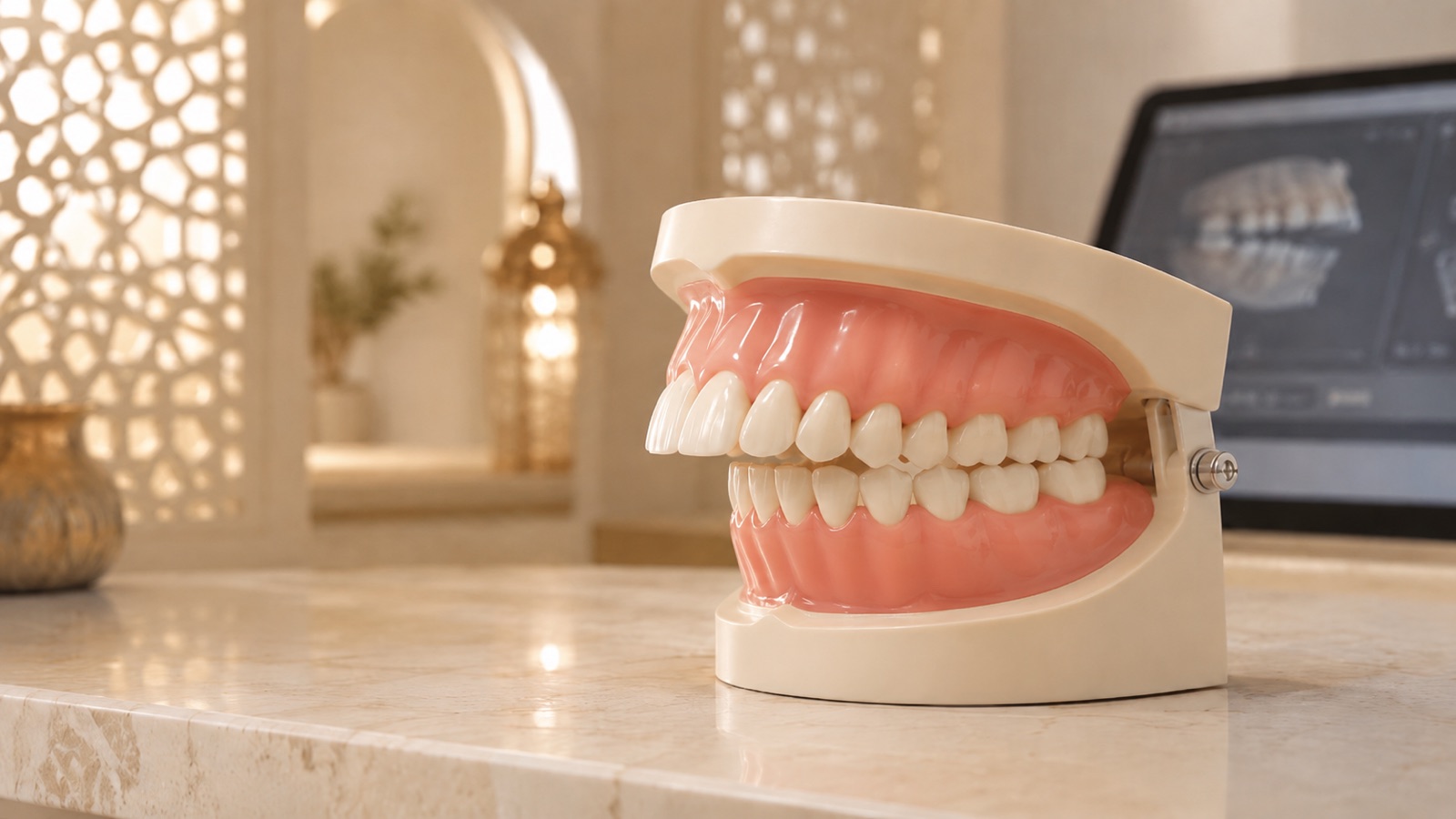
When we look at a harmonious smile, we notice a clear balance between the upper and lower teeth, with the jaws meeting in harmony when closed. In Class II malocclusion, that balance is disrupted: the upper teeth appear clearly ahead of the lower teeth, and the lower jaw may look set back.
This condition isn't only about appearance — it can also affect chewing, speech, the health of the front teeth, and the harmony of the facial features. That's why early diagnosis and a suitable treatment plan are among the most important steps toward a successful outcome.
What is Class II malocclusion?
Class II malocclusion is a condition in which the upper jaw or the upper teeth are clearly ahead of the lower jaw or lower teeth. In some cases the problem comes from protruding teeth only, while in others the cause is skeletal — a retruded lower jaw or excessive growth of the upper jaw.
Patients or parents may notice a clear horizontal gap between the upper and lower front teeth — sometimes called increased overjet.
The real causes behind Class II
The causes of Class II malocclusion usually fall into two main types: skeletal and dental. In some cases the skeletal and dental causes occur together.
First: skeletal Class II
In this type, the main problem is in the growth of the facial bones and jaws. The upper jaw may be more forward than normal, or the lower jaw may be small or set back relative to the upper jaw. A retruded lower jaw is one of the most common presentations of Class II.
Genetics play an important role here, since jaw-growth patterns and facial shape can run in families. So the condition may appear in more than one person in the same family.
Second: dental Class II
In some cases, jaw growth is normal but the teeth themselves are tipped or pushed forward. This can happen for various reasons, including some childhood habits, such as:
- Prolonged thumb-sucking.
- Tongue thrusting against the teeth.
- Mouth breathing.
- Using a pacifier for longer than necessary.
- Early loss of some baby teeth in a way that affects the alignment of the permanent teeth.
This type may look simple at first, but it needs a careful orthodontic assessment to determine whether the problem is in the teeth only or in the jaw relationship as well.
Signs that may point to Class II
The condition can appear to different degrees from one patient to another. Among the most noticeable signs:
1. Protruding upper teeth
The upper front teeth may look clearly forward, with a horizontal gap between them and the lower teeth when the mouth is closed.
2. A set-back lower jaw
In some cases the chin looks relatively recessed, which affects the side profile of the face and makes the upper jaw appear more prominent.
3. Difficulty closing the lips comfortably
Some patients have to make a slight effort to close their lips, especially when the protrusion of the front teeth is pronounced.
4. An effect on the smile and confidence
Because the front teeth are prominent, the patient may feel self-conscious when smiling or being photographed, and may unconsciously try to hide their smile.
Functional and health effects of the condition
Class II malocclusion isn't limited to outward appearance — it can be linked to a range of functional and health effects, including:
Higher risk of fracture to the front teeth
When the upper front teeth are prominent, they become more exposed to trauma — especially in children, or during sports or a fall. Scientific reviews have indicated that early treatment of protruding front teeth may reduce the likelihood of injury.
Problems with chewing and biting food
When the front teeth don't meet correctly, biting food can become difficult, making the patient rely more on the back teeth while eating.
A possible effect on speech
In some cases, protruding teeth or a jaw mismatch can affect the pronunciation of certain sounds — especially those that depend on contact between the lips and teeth or on tongue position.
Jaw-joint strain
When the jaw relationship isn't balanced, the patient may try to push the lower jaw forward while chewing or closing the mouth. This constant compensation can strain the jaw muscles or the temporomandibular joint in some cases — though the relationship between malocclusion and joint problems varies from person to person and needs specialist assessment.
How does the orthodontist diagnose the condition?
Diagnosis relies on more than just looking at the teeth. The orthodontist performs a comprehensive assessment that includes:
- Examining the teeth and bite inside the mouth.
- Analyzing the jaw relationship and the shape of the face from the front and the side.
- Radiographs when needed.
- Cephalometric analysis.
- Studying photographs of the mouth and face.
- Assessing the growth stage in children and teens.
This helps determine whether the case is dental, skeletal, or a mix of both — and therefore which treatment plan is most suitable.
How does the orthodontist intervene? A treatment plan by age
Treatment of Class II malocclusion depends on age, the severity of the case, the cause of the problem, and the patient's expectations. So there's no single plan that suits everyone.
First: childhood and growth
The growth phase is an important opportunity to treat some Class II cases, especially when the lower jaw is retruded. At this stage, the orthodontist may use functional appliances or dentofacial orthopedic devices to improve the relationship of the lower jaw to the upper jaw during growth.
These appliances don't suit every case, but they can be useful when chosen at the right time and within a precise treatment plan. In some cases, early treatment can reduce the severity of the problem and make later treatment easier.
Second: camouflage treatment in adults
After growth is complete, jaw growth can't be modified the same way it is in children. So if the case is mild to moderate, the doctor may turn to what's called camouflage treatment.
In this type of treatment, the teeth are moved to compensate for the existing jaw-relationship discrepancy and to improve the bite and appearance as much as possible. The plan may involve fixed or clear braces, sometimes extraction of some teeth depending on the case, or the use of mini-screws to provide better anchorage while moving the teeth.
This option usually suits cases where the skeletal discrepancy isn't severe, or where the facial appearance is acceptable without the need for surgery.
Third: surgical orthodontic treatment for severe cases
In severe cases in adults — especially when the lower jaw is clearly retruded and affects the shape of the face and chewing function — orthodontics alone may not be enough.
Here a combined treatment plan is set between the orthodontist and the maxillofacial surgeon. Treatment usually begins with an orthodontic phase to prepare the teeth, then surgery is performed to reposition the jaw or jaws, after which orthodontics is completed to reach a stable, harmonious final bite.
This type of treatment isn't used for every case, but it can be the most suitable option when the skeletal problem is large and clear.
Can Class II malocclusion be prevented?
Genetic factors can't be prevented, but some factors that affect the teeth and jaw growth can be reduced, such as:
- Managing thumb-sucking or prolonged pacifier use.
- Treating mouth breathing or nasal obstruction in children.
- Seeing the dentist when baby teeth are lost early.
- Having an early orthodontic check when signs of protruding teeth or a retruded jaw appear.
An early check doesn't mean the child will start treatment right away — but it helps the doctor monitor growth and intervene at the right time when needed.
When should you see an orthodontist?
It's advisable to see an orthodontist when you notice clear protrusion of the upper teeth, a retruded lower jaw, difficulty closing the lips, or a family history of bite problems.
It's also recommended that children have their first orthodontic check around age seven, because this stage lets the doctor assess the growth of the teeth and jaws and catch problems early, before they become more complex.
In summary
Class II malocclusion isn't just 'protruding upper teeth' — it can be a complex condition that combines the teeth, the jaws, the growth pattern, and chewing and speech functions. So successful treatment always starts with an accurate diagnosis.
Treatment may be early — to guide jaw growth in children — or camouflage treatment to improve the bite in adults, or surgical in severe skeletal cases. The earlier the case is assessed, the greater the chance of choosing a simpler, more conservative treatment.
If you notice clear protrusion of the upper teeth or a retruded lower jaw, seeing an orthodontist is the first step toward understanding the condition and choosing the right treatment plan.
Written by
Dr. Abdulnasser Mosa Almahmoud
Board-certified orthodontist with 25+ years of experience treating adults and children in Riyadh.
AboutReady to start your smile journey?
Book a consultation with Dr. Almahmoud to find the treatment that fits your case.