Orthodontics · June 23, 2026 · 4 min read
The Invisible Smile: How Digital Technology Transformed Orthodontics
Orthodontics is no longer just about metal wires. See how digital scanning, 3D planning, and custom clear aligners create a calmer, more confident treatment experience.

Dr. Abdulnasser Mosa Almahmoud
Orthodontist & Dentofacial Orthopedics Consultant
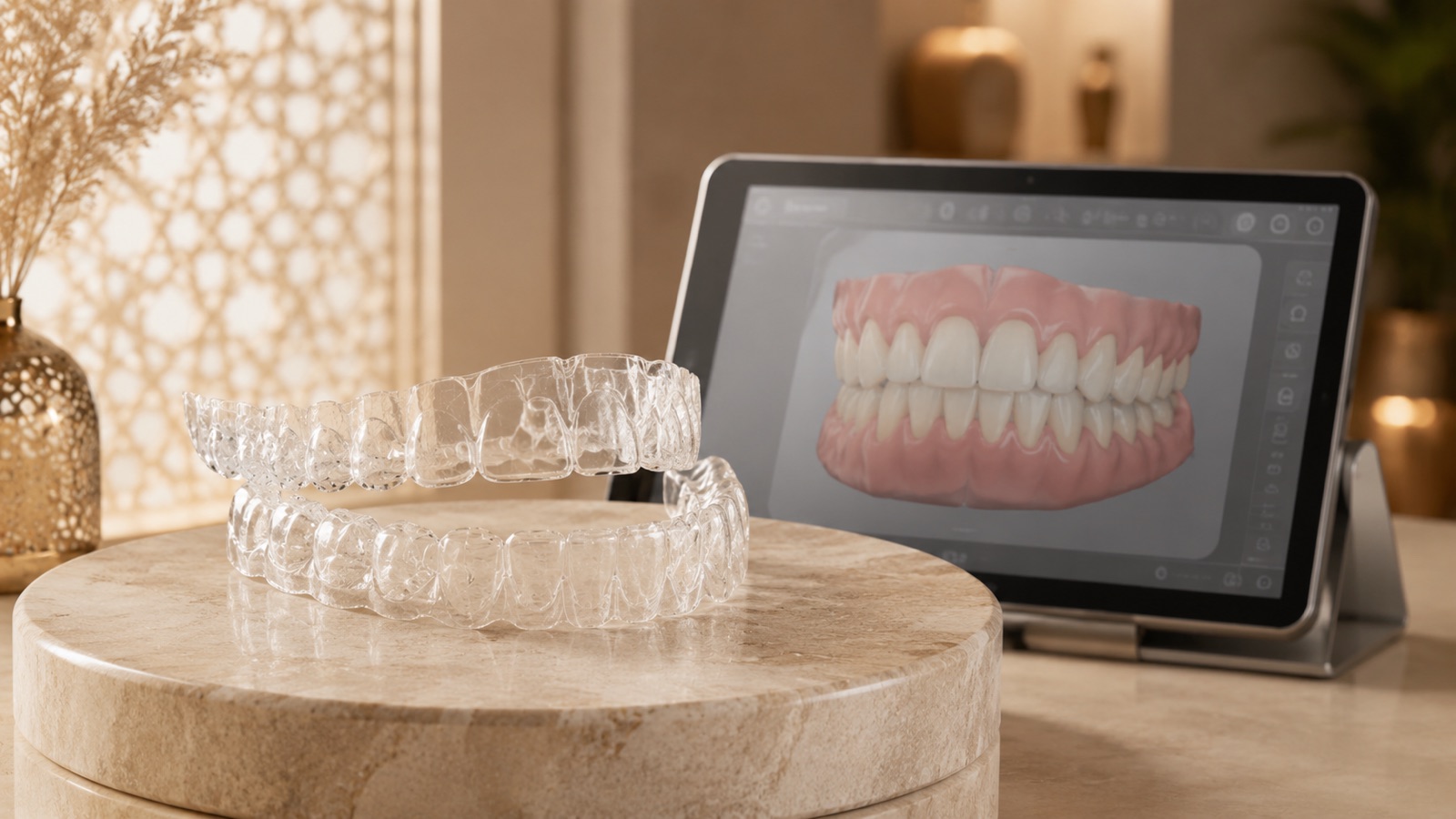
Orthodontics is no longer only about traditional metal wires or feeling self-conscious when you smile or speak. Today, digital technology has become a core part of the treatment journey — and smart clear aligners are leading the way to more comfortable, more elegant solutions.
If you've been putting off fixing your smile because of how braces look, or because you worry about how treatment might affect your daily life, clear aligners may be an option well worth getting to know.
What are clear aligners?
Clear aligners are a treatment system built around a series of custom, transparent trays made for each patient. Each tray is designed to move the teeth gradually and deliberately toward their correct position — without the traditional metal wires and brackets.
Because they are nearly invisible, clear aligners are an ideal choice for anyone who wants to improve their smile in a quiet, natural way that doesn't draw attention.
How digital technology powers clear aligners
Clear aligner treatment relies on a precise digital journey that starts with diagnosis and ends with a clear treatment plan. Here are its key stages:
1. Digital scanning of the teeth
Instead of relying on traditional impressions, which some patients find uncomfortable, an intraoral scanner can be used to create a 3D digital model of the teeth and jaws.
This digital model makes it easier to study the case clearly and understand tooth movement with greater accuracy.
2. 3D treatment planning
Once the digital model is ready, specialized software is used to simulate tooth movement step by step. Here the doctor can build a digital treatment plan that shows how the teeth will move at every stage of treatment.
This step gives the patient a clearer picture and an expected result before treatment even begins, making the plan much easier to understand.
3. Manufacturing custom trays for each stage
After the plan is approved, a series of clear trays is manufactured. Each tray is designed to create a small, controlled movement, and the patient moves on to the next tray according to the doctor's instructions.
Over time, and with consistent wear, the teeth gradually shift toward the desired position.
Why so many people prefer clear aligners
Clear aligners offer several advantages that make them a comfortable choice for many patients — especially adults, professionals, and students who care about their appearance and daily lifestyle.
1. A nearly invisible look
The most distinctive thing about clear aligners is how discreet they are. They don't easily catch the eye while you talk or smile, helping you go about your life with more confidence during treatment.
2. Removable
The trays can be removed while eating, while drinking beverages that aren't suitable for them, and while cleaning your teeth. This makes eating and daily care easier compared with some types of fixed braces.
3. Easier oral hygiene
Because the trays are removable, you can brush and floss normally. This helps reduce the buildup of food debris — as long as you follow the hygiene instructions your doctor recommends.
4. Greater day-to-day comfort
Clear aligners have no protruding wires or metal edges, which can reduce irritation of the inner cheeks and gums. You may feel some mild pressure when starting a new tray — this is usually a sign that the teeth have begun to move.
Are clear aligners right for everyone?
Despite their advantages, clear aligners aren't suitable for every case. They can be effective in many situations — such as mild to moderate crowding, gaps between teeth, and some bite problems — but more complex cases may need other orthodontic solutions or a different treatment plan.
That's why an orthodontist's assessment remains the most important step in deciding the best option for each case.
The patient's role in a successful outcome
The success of clear aligner treatment doesn't depend on technology alone — it also depends on the patient's commitment. The trays need to be worn regularly as the doctor directs, kept clean, and removed before eating.
The more closely you follow the treatment plan, the better — and sooner — the result is likely to be.
Clear aligners are about more than a prettier smile
Some people assume clear aligners are purely cosmetic, but in reality they can also help straighten the teeth, make them easier to clean, and improve the overall balance of your smile. Well-aligned teeth don't just look better — they can also support long-term oral health.
In summary
Digital technology has brought a clear leap forward in orthodontics. Through digital scanning, 3D simulation, and custom clear trays, patients can now go through a more comfortable, confident, and transparent treatment experience.
If you're looking for a quiet way to improve your smile without greatly changing your daily appearance, clear aligners may be a good fit for you. But the right decision always starts with an orthodontist's consultation to assess your case and design the most suitable plan.
Your smile can change quietly — no one will notice the steps of the journey, but everyone will notice the result.
Written by
Dr. Abdulnasser Mosa Almahmoud
Board-certified orthodontist with 25+ years of experience treating adults and children in Riyadh.
AboutReady to start your smile journey?
Book a consultation with Dr. Almahmoud to find the treatment that fits your case.